











Image link

The alert chaos ends here. Introducing FLARE.

Most SOCs don't have a visibility problem. They have a fragmentation problem. Alerts scattered across a dozen tools, each with its own interface, its own severity scale, and its own queue. FLARE ends that — one feed, one workspace, one prioritized picture of your threat landscape in real time.

Image link

Pillar Features — Problems FLARE solves

1
Scattered Alert Sources
Twelve tools, twelve interfaces, twelve severity scales. Analysts context-switch all shift long.
2
Meaningless severity
"Critical" in one platform is "medium" in another. Real threats hide in the noise.
3
No shared queue
Two analysts work the same alert. A third sits idle. No one sees the full picture.

What FLARE delivers

Everything Your Stack Is Saying. Finally in One Place.

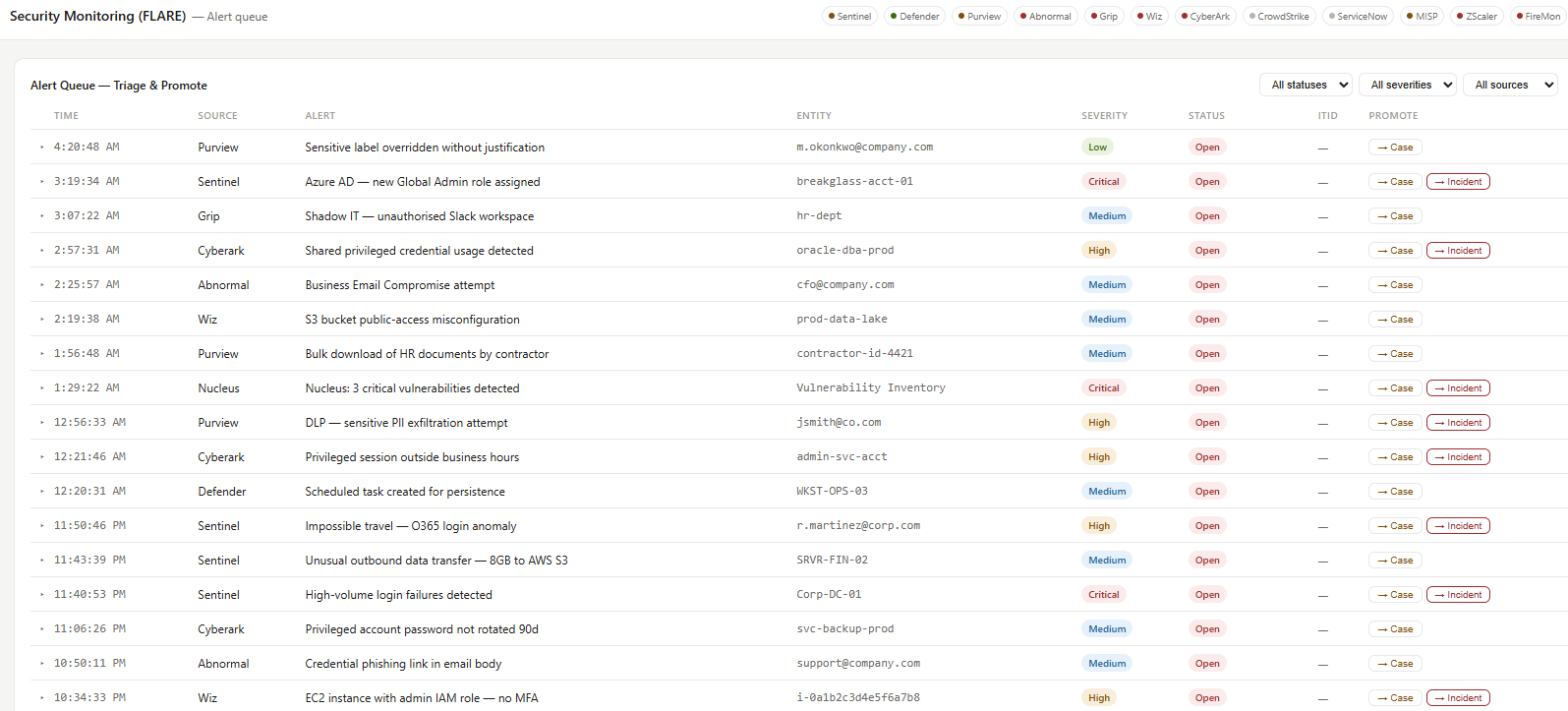
FLARE aggregates alerts from every security tool in your stack — Sentinel, Defender, CrowdStrike, Abnormal, Wiz, Zscaler, and more — into a single normalized feed. No more tool-hopping. No more missed signals buried in a separate queue.

Alerts surface in FLARE the moment they're generated. Every incoming signal is processed, categorized, and prioritized in real time — so your analysts are always working the most current picture of your threat landscape, not a snapshot from an hour ago.

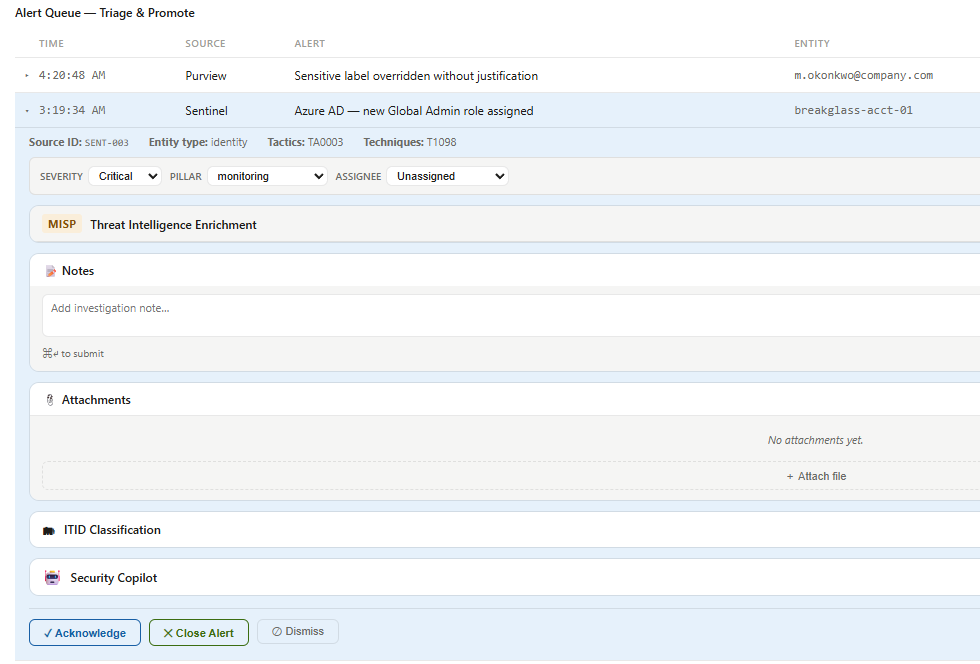
Not every alert deserves the same attention. FLARE organizes the queue by severity, recency, and source tool — giving analysts a clear, prioritized workspace where critical signals rise to the top and low-fidelity noise stays out of the way.

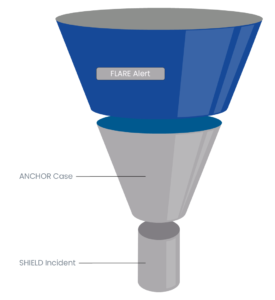
When an alert warrants deeper investigation, FLARE promotes it directly to ANCHOR with full context carried forward. No copy-pasting. No lost detail. The alert, its metadata, and its history move with it — ready for the analyst picking it up.

FLARE tracks the operational status of every connected source tool in real time. When a tool goes silent, starts flooding, or its signal quality degrades, FLARE surfaces it immediately — because a blind spot in your tooling is a blind spot in your defense.

FLARE tracks alert volume over time by tool, severity, and category — surfacing spikes, identifying patterns, and giving SOC managers the data they need to tune detection coverage and justify tooling decisions with evidence rather than instinct.

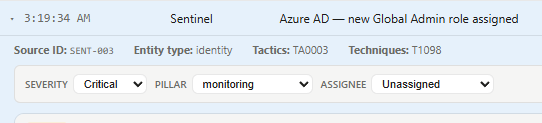
Every alert in FLARE carries more than a raw signal. Source tool, detected entity, MITRE ATT&CK technique, assigned analyst, linked cases, and investigation notes all surface in a single alert detail view — giving analysts the context to make faster, better decisions.

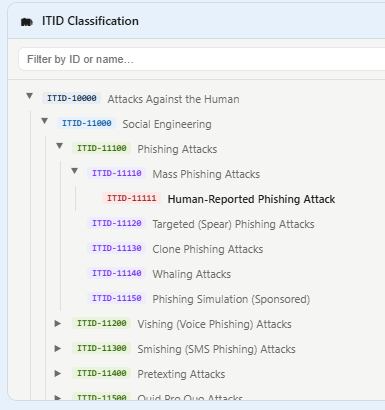
Alerts are automatically mapped to MITRE ATT&CK tactics and techniques at ingestion. Analysts see not just what triggered the alert but where it sits in the adversary kill chain — connecting individual signals to the broader attack narrative before the investigation even begins.

How FLARE works

Four steps from raw telemetry to analyst-ready alert — no PhD required.

1
Connect your sources.
Drop-in integrations for SIEM, EDR, cloud logs, firewalls, and custom feeds.
2
Normalize and enrich.
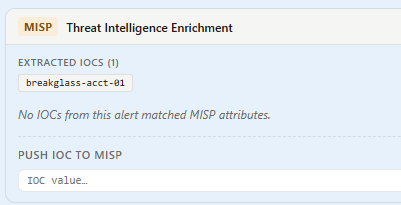
FLARE maps every event to a common schema, layers in threat intel, and attaches asset context automatically.
3
Prioritize by real risk.
Machine-scored severity combines vulnerability, exposure, and business value — not just the vendor's stock label.
4
Investigate and close.
One-click pivot to enrichment, related alerts, and your response playbooks. Close-outs train the next cycle.

Frequently Asked Questions

If you've ever asked why your alerts live in six different places, FLARE was built for you. Here are the questions analysts and security leaders ask most often about how FLARE works, what it connects to, and what it means for the way your team operates.

No. FLARE sits on top of your existing SIEM, EDR, and logging stack. Think of it as the analyst's working surface — the SIEM stays the system of record.

Most teams are ingesting alerts within a day of connecting their first source. Tuning to meaningful noise reduction typically lands inside the first 2–4 weeks.

FLARE processes alerts in-region and retains only the metadata needed for triage and history. Raw logs stay in your sources unless you explicitly forward them.

FLARE combines the original vendor severity with asset criticality, exposure (is it internet-facing?), and historical false-positive rate per rule. One "critical" on a sandboxed lab box ranks lower than a "medium" on your domain controller.

Splunk, Elastic, Sentinel, CrowdStrike, SentinelOne, Defender, AWS CloudTrail, GCP Audit, Azure Activity, plus a generic webhook ingestor for anything custom.

Yes. FLARE deep-links back to the source tool on every alert, so analysts can always jump to the original console when they need to.

An alert is the lowest, or widest fidelity telemetry type within SCOUT.  It is the raw signal from a given detection tool (EDR hit, SSSIEM rule fire, log anomaly).  It may be real, or it may be noise.  
Discover the Impact of SCOUT Through Video or a Live Demo

Security Operations Centers have never had a shortage of alerts. What they’ve always lacked is a single, intelligent place to act on them. FLARE was built to solve that problem — not by replacing the tools your team already depends on, but by connecting them into a unified operational layer that works the way analysts think and moves at the speed threats demand.

When every alert from every tool flows into one prioritized workspace, something changes. Analysts stop managing software and start managing threats. Investigations start faster because context is already there. Cases get opened on the right alerts because prioritization is built in, not bolted on. And nothing falls through the cracks between tools, between shifts, or between teams.

FLARE is the signal layer SCOUT was built on — and it’s the foundation every high-performing SOC needs. If your team is ready to stop chasing alerts across a dozen interfaces and start operating from a single, unified picture of your threat landscape, FLARE is where that starts.

SCOUT is available now. Watch the full platform demonstration and see FLARE in action — from alert ingestion to case promotion, tool health monitoring to MITRE mapping. One hour. Seven pillars. Everything your SOC has been missing.

Operate Ahead of the Threat.

SCOUT is a unified SOC platform with seven purpose-built pillars — covering every workflow from alert triage to detection engineering — built by analysts, for analysts, at the speed modern threats demand.

Rated 4.9 of 5

Image link

See What You've Been Missing.

Contact us at info@scoutcipher.com

Dallas, Texas, USA

Follow Us

SCOUT © All rights reserved