


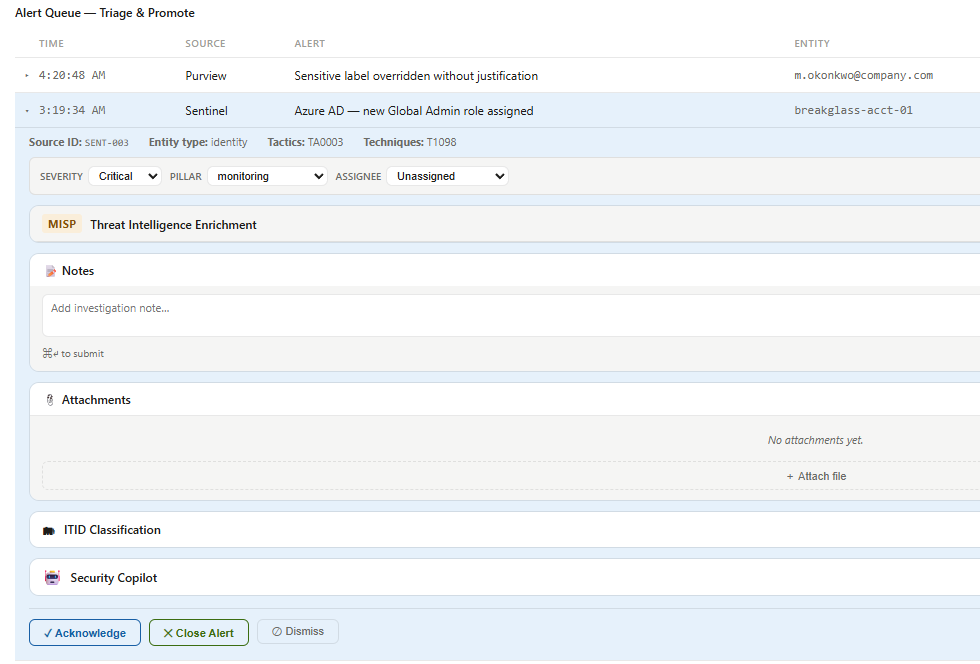









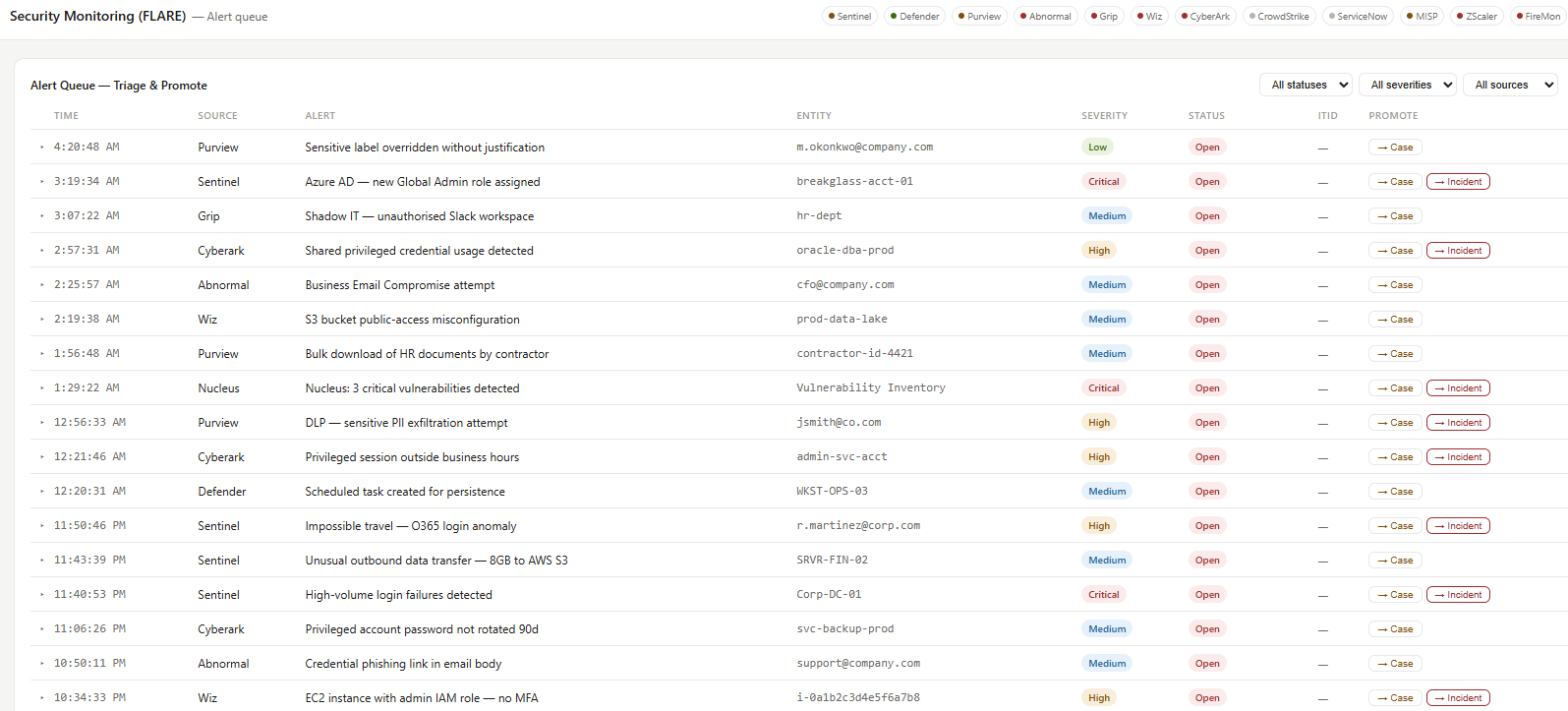

No. FLARE sits on top of your existing SIEM, EDR, and logging stack. Think of it as the analyst's working surface — the SIEM stays the system of record.
Most teams are ingesting alerts within a day of connecting their first source. Tuning to meaningful noise reduction typically lands inside the first 2–4 weeks.
FLARE processes alerts in-region and retains only the metadata needed for triage and history. Raw logs stay in your sources unless you explicitly forward them.
FLARE combines the original vendor severity with asset criticality, exposure (is it internet-facing?), and historical false-positive rate per rule. One "critical" on a sandboxed lab box ranks lower than a "medium" on your domain controller.
Splunk, Elastic, Sentinel, CrowdStrike, SentinelOne, Defender, AWS CloudTrail, GCP Audit, Azure Activity, plus a generic webhook ingestor for anything custom.
Yes. FLARE deep-links back to the source tool on every alert, so analysts can always jump to the original console when they need to.
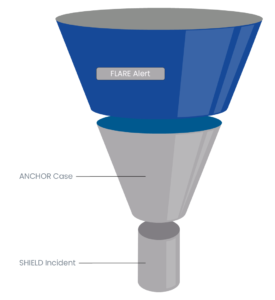
An alert is the lowest, or widest fidelity telemetry type within SCOUT. It is the raw signal from a given detection tool (EDR hit, SSSIEM rule fire, log anomaly). It may be real, or it may be noise.